|
Going to a Greek Island
on your own does not have to be an
intimidating experience. Just follow these
simple instructions and you will have an
adventure which can be duplicated a few
thousand times, or as many times as there are
Greek islands.
|
|
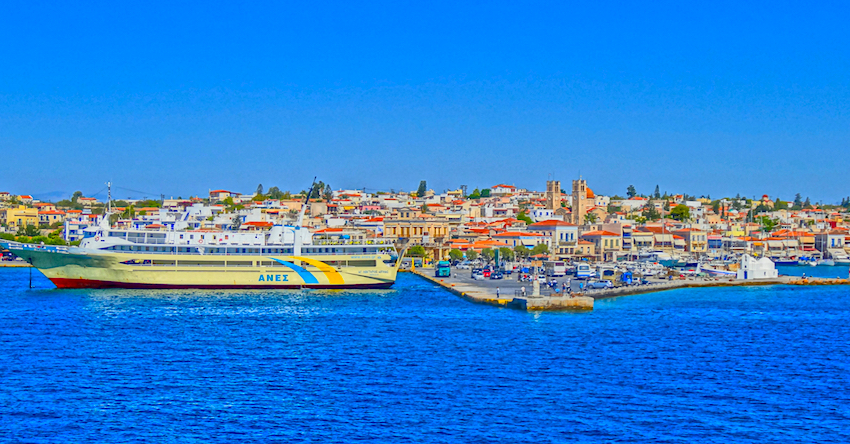
 For the sake of convenience I will use the
island of Aegina as our sample island, though
of course you could substitute any island of
your choice. I chose Aegina because it is
close to Athens, only an hour by ferry, half
that by Flying Dolphin, and because there are
boats leaving every hour so I don't have to
wake up early to catch a morning boat, the
majority of which leave between 7 and 9 am, and I won't need to buy an advance ticket.
If this was an early boat you will have asked
the concierge at your hotel to have a taxi
waiting for you at least an hour and fifteen
minutes before the boats scheduled departure.
If you tell the taxi the name of the boat, or
which island you are going to, he will know
exactly where to go. From downtown Athens to
Pireaus should cost about 10 Euros. Don't count
on the ferry leaving late and you making it in
the nick of time. I have actually missed a
ferry by a foot. I could have jumped but I did
not want to risk falling into the murky waters
of Pireaus, (plus my girlfriend was on
crutches).
For the sake of convenience I will use the
island of Aegina as our sample island, though
of course you could substitute any island of
your choice. I chose Aegina because it is
close to Athens, only an hour by ferry, half
that by Flying Dolphin, and because there are
boats leaving every hour so I don't have to
wake up early to catch a morning boat, the
majority of which leave between 7 and 9 am, and I won't need to buy an advance ticket.
If this was an early boat you will have asked
the concierge at your hotel to have a taxi
waiting for you at least an hour and fifteen
minutes before the boats scheduled departure.
If you tell the taxi the name of the boat, or
which island you are going to, he will know
exactly where to go. From downtown Athens to
Pireaus should cost about 10 Euros. Don't count
on the ferry leaving late and you making it in
the nick of time. I have actually missed a
ferry by a foot. I could have jumped but I did
not want to risk falling into the murky waters
of Pireaus, (plus my girlfriend was on
crutches).
From Athens the 040 goes from the bottom of Syntagma square to Pireaus and the new 049 goes from Omonia to Pireaus. There is also a stop near the Acropolis museum on Vas Amalias Street near Hadrian's Arch on the Plaka side of the street where you can catch the X80 express that goes from Syntagma to Pireaus.
|
|
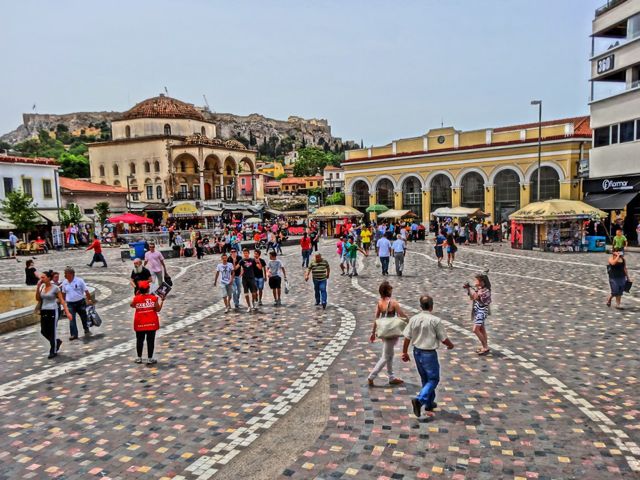 You can also take the
Metro, as I do, by using the steps that
follow. Because I am only doing a day trip
there is no need to check out of my hotel, nor
is there any need to bring my luggage, which
makes traveling today a breeze. All I have is
my digital camera and what
I am wearing. You may want to bring a day bag
with a towel and bathing suit. Your first step is to find the train station closest to your hotel. Most
likely this is Monastiraki in the flea market,
easy to locate. You can walk down Metropolis
or Ermou streets or follow Adrianou until you
hit Hadrian's wall at Aeolou, make a right and
then your next left on Pondrosou.
Inside the train station
there are machines to buy your ticket. It's
about a euro and a half to Pireaus so stick a coin in and
press the buttons until it reads one 1.50. Then
when it rejects your money and does not give
you a ticket walk up to the friendly guy at
the booth, or stand in line and buy two
tickets so you don't have to do this again
when you come back.
(You can also take the Proastiakos, the Athens Suburban Rail, if that is more convenient to where you are staying, and it goes right to the port of Pireaus as well.)
You can also take the
Metro, as I do, by using the steps that
follow. Because I am only doing a day trip
there is no need to check out of my hotel, nor
is there any need to bring my luggage, which
makes traveling today a breeze. All I have is
my digital camera and what
I am wearing. You may want to bring a day bag
with a towel and bathing suit. Your first step is to find the train station closest to your hotel. Most
likely this is Monastiraki in the flea market,
easy to locate. You can walk down Metropolis
or Ermou streets or follow Adrianou until you
hit Hadrian's wall at Aeolou, make a right and
then your next left on Pondrosou.
Inside the train station
there are machines to buy your ticket. It's
about a euro and a half to Pireaus so stick a coin in and
press the buttons until it reads one 1.50. Then
when it rejects your money and does not give
you a ticket walk up to the friendly guy at
the booth, or stand in line and buy two
tickets so you don't have to do this again
when you come back.
(You can also take the Proastiakos, the Athens Suburban Rail, if that is more convenient to where you are staying, and it goes right to the port of Pireaus as well.)
|
|
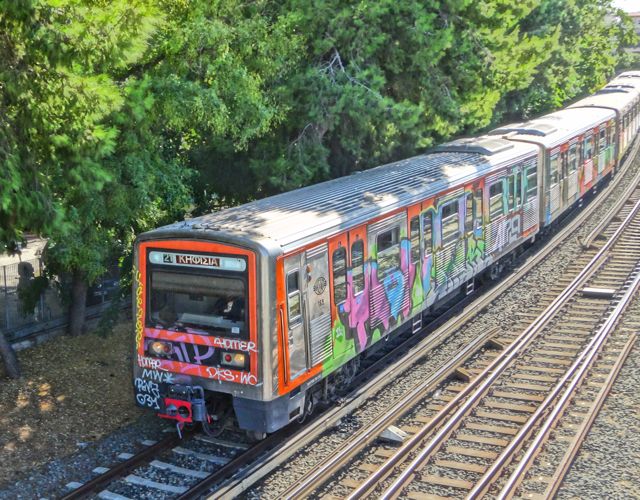 As you face the train
tracks you have a choice. Left to Kifissia or
right to Pireaus. Go right but not before
showing your ticket to the scanner to have it validated (or invalidated since
once you get off the train it is useless after 90 minutes).
Then walk down the stairs. Wait on the platform for the train
to come and when the doors open, hop aboard,
just as you would in your own country. Watch out for pick-pockets. They like to create a disturbance and then grab your wallet. But if you have read my article Defeating the Pick-pockets you have nothing to worry about. As you face the train
tracks you have a choice. Left to Kifissia or
right to Pireaus. Go right but not before
showing your ticket to the scanner to have it validated (or invalidated since
once you get off the train it is useless after 90 minutes).
Then walk down the stairs. Wait on the platform for the train
to come and when the doors open, hop aboard,
just as you would in your own country. Watch out for pick-pockets. They like to create a disturbance and then grab your wallet. But if you have read my article Defeating the Pick-pockets you have nothing to worry about.
Above the doors in the
interior of the car is a map of the metro line
as it is today. There is one green line that goes from
Pireaus to Kifissia in the northern suburbs and that is the one you are on hopefully. There are a couple other lines that zig-zag around it which are red and blue and if you started in Makrianni or Syntagma you probably were on one of these lines to get to Monastiraki.
The trip to Pireaus is about twenty minutes
and actually sort of entertaining if you look
out the window. You will see neighborhoods
like Moschaton and Kalithea where you will
probably never walk, but are quite nice.
Around Thission there are archeological ruins
right next to the tracks and at Faliron you
cross over a river! Well it's not much of a
river. You would not want to swim or wade in
it since the percent of water versus other
substances is a little low, but at one time it
was a real river that emptied into the Faliron
Delta where the big Olympic indoor stadium is
now.
|
|
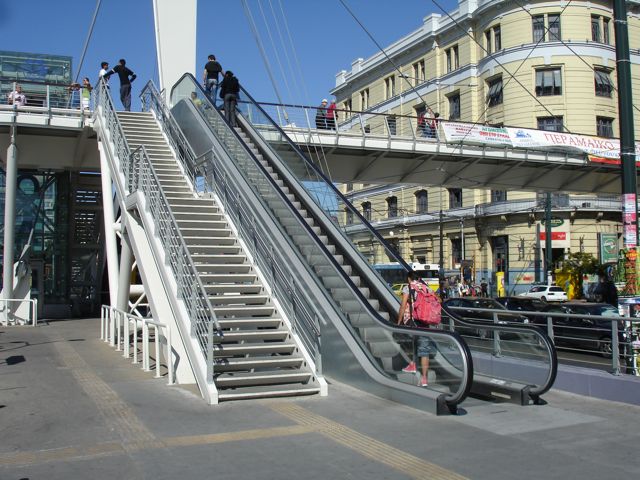 When you get to the last
stop in the old Pireaus station walk to the
front of the train. You can drop your ticket
in the garbage unless you plan on returning within 90 minutes, for example if you miss your ferry. Better hang on to it just in case. If you keep walking straight
out the door and take a left there are several ticket agencies on the main street or if you cross the street to where the boats are there are more ticket agencies at Platia Kariaskakis where the bus terminal is. You can also buy
tickets at the boat which is the best idea for an
island like Aegina which has many boats going
each day. If you look through the archway you
will see your first ferry straight ahead. (The
ferries directly across the street are usually
going to Sifnos, Paros, Naxos, and Santorini.)
There are some fast food joints on the main
street and if you wander around the back
streets you can find all sorts of stores to
buy snacks or supplies for your trip. Since
the trip to Aegina is only an hour away we
don't need much in the way of supplies.
Getting across the main
street is no longer the challenge it once was. It seemed like the light
never favored the pedestrians and when it
did it only lets them get half way across,
trapping them in the narrow median between
cars that race by. This was the most dangerous part of the trip
and the last barrier between the city and
freedom.
Happy Note! As of spring of 2006 they have built a pedestrian bridge and you can now cross in complete safety! Once you get across there is a map of
where the boats are docked and a shuttle bus
that will take you back and forth eternally if
you wish. There are also some big signs over the road that point you in the direction of the ferries to the various islands. When you get to the last
stop in the old Pireaus station walk to the
front of the train. You can drop your ticket
in the garbage unless you plan on returning within 90 minutes, for example if you miss your ferry. Better hang on to it just in case. If you keep walking straight
out the door and take a left there are several ticket agencies on the main street or if you cross the street to where the boats are there are more ticket agencies at Platia Kariaskakis where the bus terminal is. You can also buy
tickets at the boat which is the best idea for an
island like Aegina which has many boats going
each day. If you look through the archway you
will see your first ferry straight ahead. (The
ferries directly across the street are usually
going to Sifnos, Paros, Naxos, and Santorini.)
There are some fast food joints on the main
street and if you wander around the back
streets you can find all sorts of stores to
buy snacks or supplies for your trip. Since
the trip to Aegina is only an hour away we
don't need much in the way of supplies.
Getting across the main
street is no longer the challenge it once was. It seemed like the light
never favored the pedestrians and when it
did it only lets them get half way across,
trapping them in the narrow median between
cars that race by. This was the most dangerous part of the trip
and the last barrier between the city and
freedom.
Happy Note! As of spring of 2006 they have built a pedestrian bridge and you can now cross in complete safety! Once you get across there is a map of
where the boats are docked and a shuttle bus
that will take you back and forth eternally if
you wish. There are also some big signs over the road that point you in the direction of the ferries to the various islands.
|
|
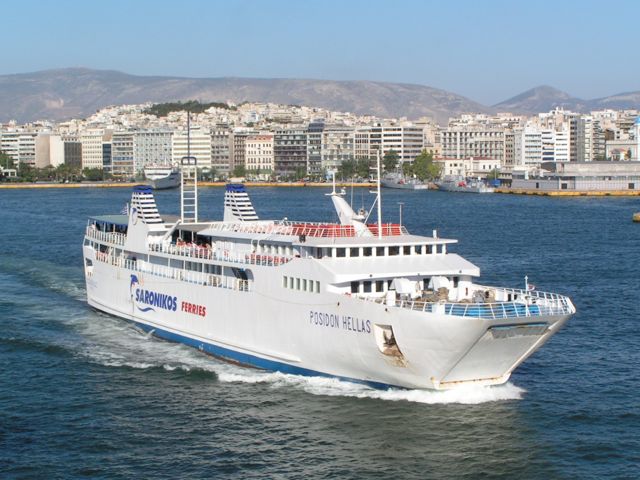 Our Aegina boats are to the
left of the peninsula that houses the ticket
agencies known as Akti Tzelepi and Platia Kariaskakis. There is a
square with a statue of Kolokotronis, a hero
of the war of Independence. (This is also where you can catch the X96 express bus to the airport and where the bus from the airport drops you off.) Walk along the
dock until you see a boat that seems to be
leaving sooner then the rest. They have their
departure times and destination written on
signs or banners across the stern (boat talk
for rear), and there will be increased
activity in those that are leaving. You can
buy your ticket at the booth right in front of
the boat. Kids under six don't pay and under
ten pay half price.
Normally you will have a
choice between first class, second class or
deck, but in the case of Aegina, getting a
cabin would be ridiculous since you would be
at your destination before you figured out how
to use the shower. But an island like Rhodes,
Lesvos, Crete, Samos, Patmos and even
Santorini which are between ten and fifteen
hours away, I always splurge for a first class
cabin. It costs about the same as flying but
it is more relaxing and it entitles you to eat
in the first class dining room which is the
same food as the self-service cafeteria only
they bring it to you and you get to leave a
tip. Remember that it is tough to get a cabin
without booking early. You probably won't find
one if you are buying your ticket at the boat.
If you are bringing a car you can buy your
ticket to Aegina easily enough in the port,
but for other islands definately get it in
advance. If you are going to Hydra keep in
mind that there are no cars allowed. Our Aegina boats are to the
left of the peninsula that houses the ticket
agencies known as Akti Tzelepi and Platia Kariaskakis. There is a
square with a statue of Kolokotronis, a hero
of the war of Independence. (This is also where you can catch the X96 express bus to the airport and where the bus from the airport drops you off.) Walk along the
dock until you see a boat that seems to be
leaving sooner then the rest. They have their
departure times and destination written on
signs or banners across the stern (boat talk
for rear), and there will be increased
activity in those that are leaving. You can
buy your ticket at the booth right in front of
the boat. Kids under six don't pay and under
ten pay half price.
Normally you will have a
choice between first class, second class or
deck, but in the case of Aegina, getting a
cabin would be ridiculous since you would be
at your destination before you figured out how
to use the shower. But an island like Rhodes,
Lesvos, Crete, Samos, Patmos and even
Santorini which are between ten and fifteen
hours away, I always splurge for a first class
cabin. It costs about the same as flying but
it is more relaxing and it entitles you to eat
in the first class dining room which is the
same food as the self-service cafeteria only
they bring it to you and you get to leave a
tip. Remember that it is tough to get a cabin
without booking early. You probably won't find
one if you are buying your ticket at the boat.
If you are bringing a car you can buy your
ticket to Aegina easily enough in the port,
but for other islands definately get it in
advance. If you are going to Hydra keep in
mind that there are no cars allowed.
|
|
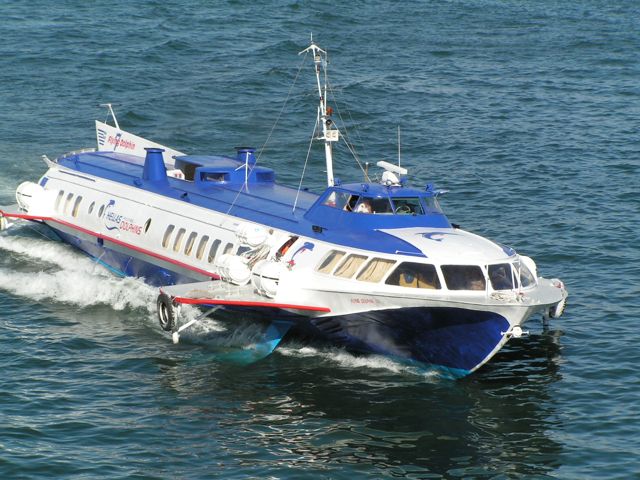 You may decide to sacrifice
comfort for speed and taking one of the highspeed ferries and catamarans. These
cost twice as much as the cheapest ticket on
the ferry, go twice as fast and get you twice
as seasick if the weather is bad. They get you there
fast and if you don't mind flying you won't
mind this. (I don't like either.)
On really rough days the snall highspeeds can be a little scary. Don't be afraid, because no highspeed has sunk or turned
over (that I know of), though they have run
over a fishing boat or two and the new generation of highspeed ferries handle rough weather a lot better. (Photo of the original Ceres Flying Dolphins which were the pioneers of the Greek highspeed ferry service. Most of them have retired but there are a couple small companies that still use them in the Saronic Gulf.) You may decide to sacrifice
comfort for speed and taking one of the highspeed ferries and catamarans. These
cost twice as much as the cheapest ticket on
the ferry, go twice as fast and get you twice
as seasick if the weather is bad. They get you there
fast and if you don't mind flying you won't
mind this. (I don't like either.)
On really rough days the snall highspeeds can be a little scary. Don't be afraid, because no highspeed has sunk or turned
over (that I know of), though they have run
over a fishing boat or two and the new generation of highspeed ferries handle rough weather a lot better. (Photo of the original Ceres Flying Dolphins which were the pioneers of the Greek highspeed ferry service. Most of them have retired but there are a couple small companies that still use them in the Saronic Gulf.)
|
|
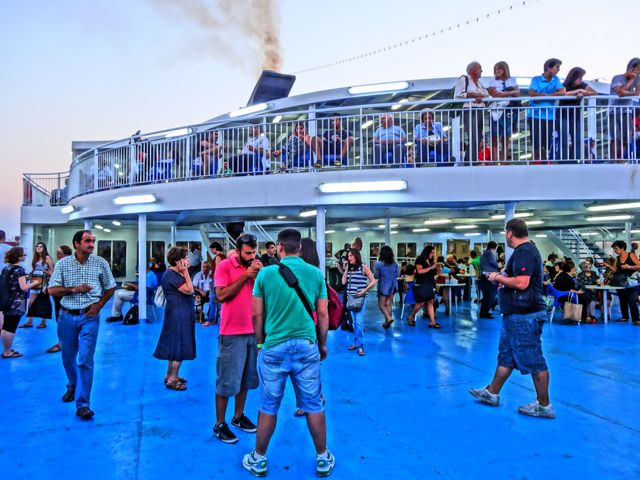 Once you have bought your
ticket find a good spot on the ferry.
They check your ticket when you get
on so have it ready. Other times they check it
on board. You can leave your heavy luggage in
the car garage by the stairs. There is usually
a storage compartment you can fight your way
to. Andrea always leaves her stuff there but I
take mine with me since I can never remember
what I packed where and what I may need in the
course of the trip. The lounges
, which used to be very smokey are now smoke-free. That means if someone is smoking a cigarette you can ask them to put it out. They will argue with you but then everyone will take your side and he will go smoke on deck rather than risk further humiliation. There
is a snack bar and they sell beer and ouzo and
almost anything you would want on an hour long
ferry boat ride. The bigger ferries have sit-down restaurants and fast food cafeterias. Once you have bought your
ticket find a good spot on the ferry.
They check your ticket when you get
on so have it ready. Other times they check it
on board. You can leave your heavy luggage in
the car garage by the stairs. There is usually
a storage compartment you can fight your way
to. Andrea always leaves her stuff there but I
take mine with me since I can never remember
what I packed where and what I may need in the
course of the trip. The lounges
, which used to be very smokey are now smoke-free. That means if someone is smoking a cigarette you can ask them to put it out. They will argue with you but then everyone will take your side and he will go smoke on deck rather than risk further humiliation. There
is a snack bar and they sell beer and ouzo and
almost anything you would want on an hour long
ferry boat ride. The bigger ferries have sit-down restaurants and fast food cafeterias.
|
|
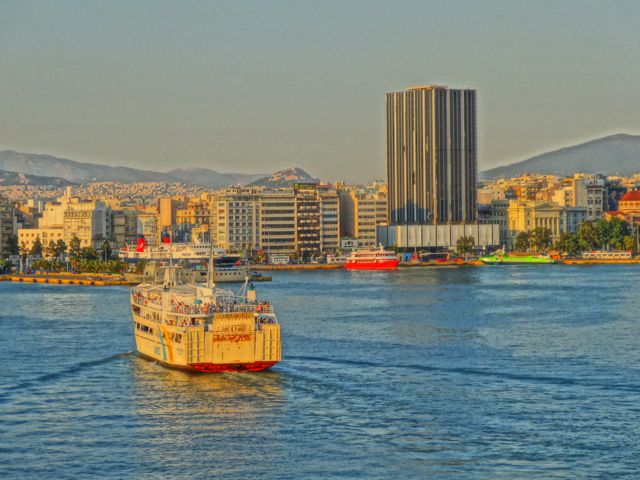 I prefer to sit outside and
watch the commotion as the ship leaves and the
streets of Pireaus recede.
One of my favorite pastimes
is seeing all the ferries and cruise ships as
we leave the harbor of Pireaus. I get a
special kick when we pass the Lesvos ferry
boats because they are the last in line and I
have been on them so many times it's like
seeing an old friend. I always use up about
two rolls of film every time we leave for an
island just taking pictures of all the
ships.
The beautiful steel and glass tower you see as you sail away is sort of the unofficial symbol of Pireaus. It is the city's first skyscraper, built in the seventies and not completed because the calculations were wrong and the building was unsafe. So rather than leave a big embarrassing concrete skeleton, a giant version of what you see all over Greece, they decided to cover it in glass and plastic and at least make it look like a real modern skyscraper since that was easier
than taking it down. So for over 30 years it had stood there, a proud symbol of ineptitude for all the world to marvel at.
In the last few years with the help of modern engineering and a lot of money they have completed the building and it is now full of offices and humans just like a real skyscraper. I prefer to sit outside and
watch the commotion as the ship leaves and the
streets of Pireaus recede.
One of my favorite pastimes
is seeing all the ferries and cruise ships as
we leave the harbor of Pireaus. I get a
special kick when we pass the Lesvos ferry
boats because they are the last in line and I
have been on them so many times it's like
seeing an old friend. I always use up about
two rolls of film every time we leave for an
island just taking pictures of all the
ships.
The beautiful steel and glass tower you see as you sail away is sort of the unofficial symbol of Pireaus. It is the city's first skyscraper, built in the seventies and not completed because the calculations were wrong and the building was unsafe. So rather than leave a big embarrassing concrete skeleton, a giant version of what you see all over Greece, they decided to cover it in glass and plastic and at least make it look like a real modern skyscraper since that was easier
than taking it down. So for over 30 years it had stood there, a proud symbol of ineptitude for all the world to marvel at.
In the last few years with the help of modern engineering and a lot of money they have completed the building and it is now full of offices and humans just like a real skyscraper.
|
|
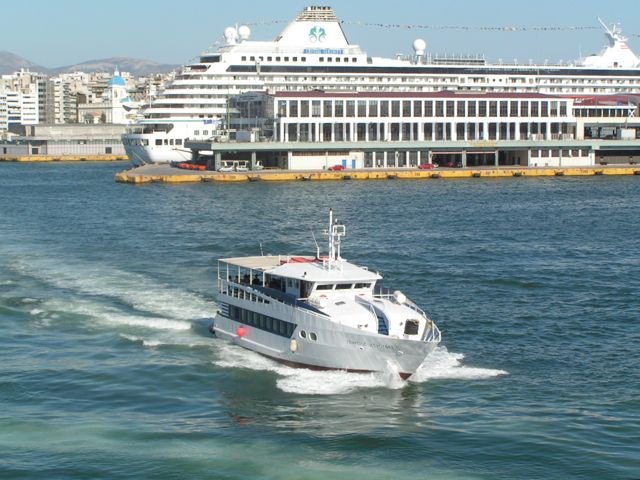 The ferry slowly makes its way through the harbor, passing other ferries, cruise ships, and even some ferries owned by bankrupt companies that they can't figure out whose responsibility it is to get rid of them. Once we leave the harbor
the ferry picks up speed and makes it's way
through a gauntlet of tankers and freighters
that have been anchored outside Pireaus for as
long as I can remember though their numbers
have swelled. These are ships waiting for
repairs, cargo, crew, or the scrap heap. The
Greeks have the second largest merchant
marine, an amazing claim for such a small
country, but they have always been
mariners.
The hour trip to Aegina can
be spent gazing out to sea (boring), or
reading the paper. The International Herald
Tribune (New York Times) is the
perfect length for this trip and you can throw
it away in the recycling bin when you arrive so you don't have to
carry it around. You can buy the Aegina
guide to read on the return trip, better late
then never. The ferry slowly makes its way through the harbor, passing other ferries, cruise ships, and even some ferries owned by bankrupt companies that they can't figure out whose responsibility it is to get rid of them. Once we leave the harbor
the ferry picks up speed and makes it's way
through a gauntlet of tankers and freighters
that have been anchored outside Pireaus for as
long as I can remember though their numbers
have swelled. These are ships waiting for
repairs, cargo, crew, or the scrap heap. The
Greeks have the second largest merchant
marine, an amazing claim for such a small
country, but they have always been
mariners.
The hour trip to Aegina can
be spent gazing out to sea (boring), or
reading the paper. The International Herald
Tribune (New York Times) is the
perfect length for this trip and you can throw
it away in the recycling bin when you arrive so you don't have to
carry it around. You can buy the Aegina
guide to read on the return trip, better late
then never.
|
|
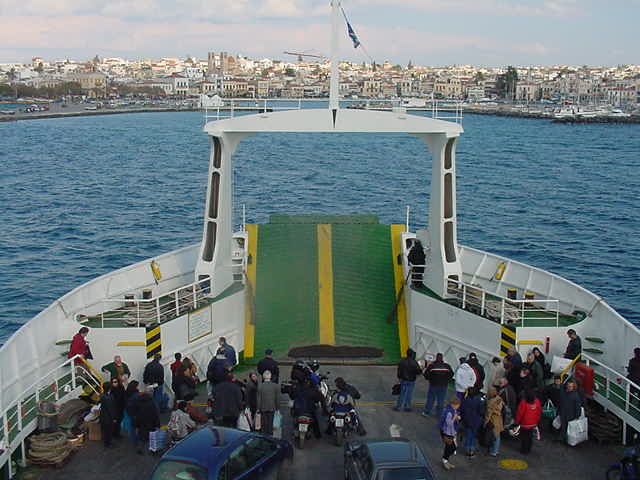 When you arrive in Aegina
you make your way to the front of the vessel.
Most ships you get on and off in the back but
for some reason the ship I was on was different. In the Saronic it depends
which island you are getting off on which end
of the ship you exit from. If you are going to
Methena or Poros you get off in the back.
Aegina and Angistri you disembark from the
front, I mean the bow. At least on the boat I was on. I know it seems like they are intentionally trying to confuse you but there is a good reason for this. I just don't know what it is. Anyway there are signs
that tell you which way to go, not that you will need them. But in general when you take a ferry you get off the way you got on which is from the back of the boat. If this were a
popular Cycladic island like Mykonos, Paros,
Naxos, Sifnos or Santorini there may be
people waiting on the dock holding
up signs with pictures of their rooms or
hotels. In this situation you just find one
that looks nice in location you want to be,
whether it is a beach or a town. If you have
booked your accommodations in advance there is
a good chance that your ride is somewhere in
the crowd so look for someone holding a
sign with the name of your hotel or even a
scrawled word that has some resemblance to
your own name.
When you arrive in Aegina
you make your way to the front of the vessel.
Most ships you get on and off in the back but
for some reason the ship I was on was different. In the Saronic it depends
which island you are getting off on which end
of the ship you exit from. If you are going to
Methena or Poros you get off in the back.
Aegina and Angistri you disembark from the
front, I mean the bow. At least on the boat I was on. I know it seems like they are intentionally trying to confuse you but there is a good reason for this. I just don't know what it is. Anyway there are signs
that tell you which way to go, not that you will need them. But in general when you take a ferry you get off the way you got on which is from the back of the boat. If this were a
popular Cycladic island like Mykonos, Paros,
Naxos, Sifnos or Santorini there may be
people waiting on the dock holding
up signs with pictures of their rooms or
hotels. In this situation you just find one
that looks nice in location you want to be,
whether it is a beach or a town. If you have
booked your accommodations in advance there is
a good chance that your ride is somewhere in
the crowd so look for someone holding a
sign with the name of your hotel or even a
scrawled word that has some resemblance to
your own name.
|
|
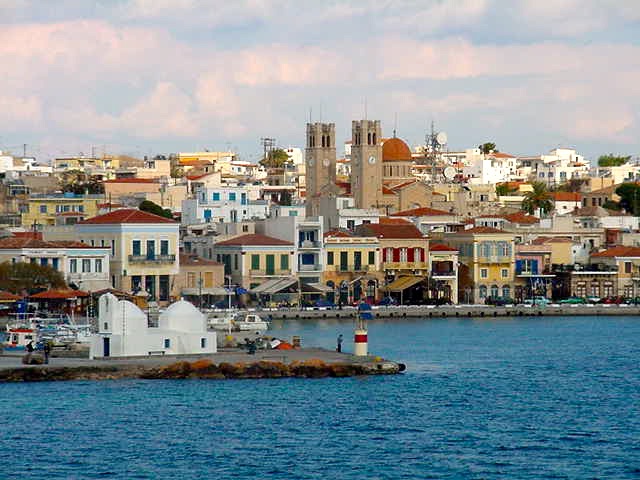
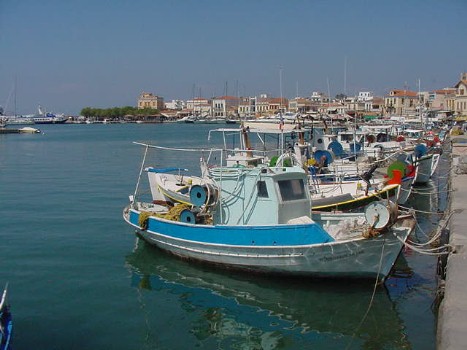 Aegina is not a bad place
considering it is so close to Athens. It is a
real honest to goodness Greek island with an
attractive waterfront, a little white church,
plenty of fishing boats and some pretty nice
sailboats too. There are two caiques (Greek
style fishing boats) that are fruit and
vegetable markets. There is a bustling fish
and meat market and the small street behind
the harbor road is filled with cafes, small
shops, cafeneons, people, and closed to
automobile traffic. All the cafeneons have octopus
hanging in front of them and charcoal grills
to cook them for ouzo mezedes. Very civilized.
When I get off the ferry I look for a place to
sit, have a coffee or a drink, relax and get
my bearings. Most islands will have a line of
cafes on the waterfront and Aegina is no
exception. They are usually more expensive
then those on the back streets but the vantage
point they give make them worth the extra
drachma.
Aegina is not a bad place
considering it is so close to Athens. It is a
real honest to goodness Greek island with an
attractive waterfront, a little white church,
plenty of fishing boats and some pretty nice
sailboats too. There are two caiques (Greek
style fishing boats) that are fruit and
vegetable markets. There is a bustling fish
and meat market and the small street behind
the harbor road is filled with cafes, small
shops, cafeneons, people, and closed to
automobile traffic. All the cafeneons have octopus
hanging in front of them and charcoal grills
to cook them for ouzo mezedes. Very civilized.
When I get off the ferry I look for a place to
sit, have a coffee or a drink, relax and get
my bearings. Most islands will have a line of
cafes on the waterfront and Aegina is no
exception. They are usually more expensive
then those on the back streets but the vantage
point they give make them worth the extra
drachma.
|
|
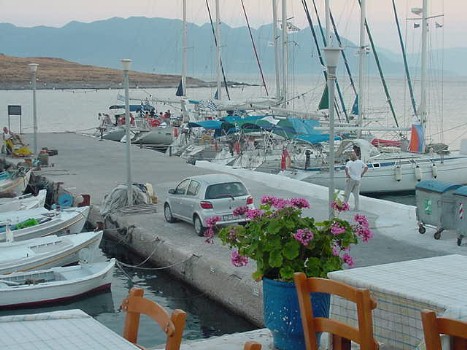 To be honest, I have an
ulterior motive on this trip besides
enlightening travelers to the simple pleasure
of visiting a nearby Greek island. I am going
to look at the small fishing village of
Perdika where my friends Elias and Katerina
have a house. I want to check it out as a
possible place to live if I should move back
to Greece because they say you can be in the
center of Athens in less then an hour from
Perdika if you take the Flying Dolphin and the
metro. There is a taxi stand right by the
ferry boats and the trip to Perdika is a 10
minute drive and costs about $7.
Perdika is indeed a small
fishing village lined with nice little
restaurants, it's harbor guarded by an island
that is actually just a big rock and is known
for its wild peacocks. I have lunch at a
colorful restaurant called
Saronis
, where the waiter, Dionysious tells me all
there is to know about Perdika. The swimming
across the bay is some of the best in the
Aegean, at least the part of the Aegean within
ten miles of Athens. Because migrating fish
pass closely by the fishing is excellent,
especially for snorkel and spear fishing. The
restaurant is owned by a German woman named
Claudia who has been here for twenty years.
The fried fish, greek salad and sadzicki are
excellent. The view is perfect for ouzo and
mezedes too. There are many foreigners in the
village, some with businesses, others just
escaping life in the 'real world'. The main
street is above the harbor road and is car
free. It is surprisingly Cycladic looking with
geometric houses painted white to reflect the
sun. To be honest, I have an
ulterior motive on this trip besides
enlightening travelers to the simple pleasure
of visiting a nearby Greek island. I am going
to look at the small fishing village of
Perdika where my friends Elias and Katerina
have a house. I want to check it out as a
possible place to live if I should move back
to Greece because they say you can be in the
center of Athens in less then an hour from
Perdika if you take the Flying Dolphin and the
metro. There is a taxi stand right by the
ferry boats and the trip to Perdika is a 10
minute drive and costs about $7.
Perdika is indeed a small
fishing village lined with nice little
restaurants, it's harbor guarded by an island
that is actually just a big rock and is known
for its wild peacocks. I have lunch at a
colorful restaurant called
Saronis
, where the waiter, Dionysious tells me all
there is to know about Perdika. The swimming
across the bay is some of the best in the
Aegean, at least the part of the Aegean within
ten miles of Athens. Because migrating fish
pass closely by the fishing is excellent,
especially for snorkel and spear fishing. The
restaurant is owned by a German woman named
Claudia who has been here for twenty years.
The fried fish, greek salad and sadzicki are
excellent. The view is perfect for ouzo and
mezedes too. There are many foreigners in the
village, some with businesses, others just
escaping life in the 'real world'. The main
street is above the harbor road and is car
free. It is surprisingly Cycladic looking with
geometric houses painted white to reflect the
sun.
The village is on a
peninsula that has been landscaped with stones
and is full of wildflowers. There is a large
church near the tip and the rocks by the sea
have been filled in to make platforms for
sunbathing and swimming. It's not Paradise
beach, nor is it even Astir in Glyfada, but
for being less then an hour from Athens it is
not bad. Enough ouzo and grilled octopus I
could easily get used to it until it was time
to de-tox and recuperate.
|
|
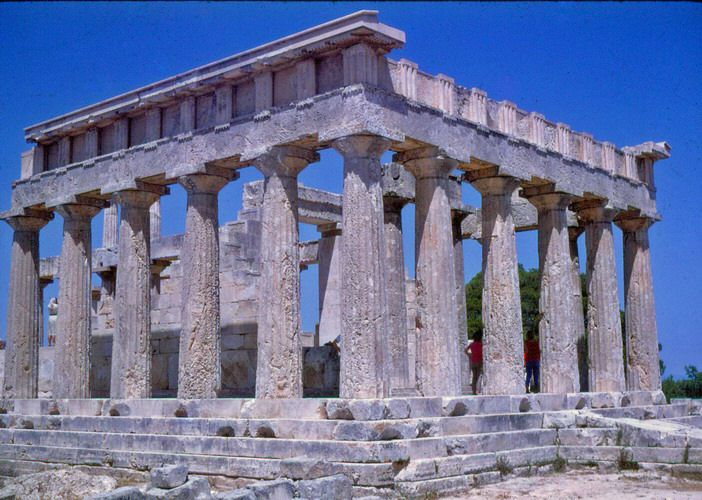 Aegina is famous for two
things really. The Doric temple dedicated to
Aphaea is well preserved and was built around
400 bc when Aegina's power challenged that of
Athens. The other is pistachios. Aegina is The
Pistachio Island with trees everywhere
and bags of it sold even in the tourist shops.
And I would have bought some back with me
except I had to run to catch the ferry which I
barely made. I didn't even have time to buy
the Aegina guidebook so I could have more info
in my webpage for the island then what can I
get from Lonely Planet, or my own experience
as a youth when we used to come to the island
to do things we could not do under the
watchful eyes of our parents. Really not the
kind of info one could put in a travel guide
but a lot more fun then taking pictures of
fruit boats. Aegina is famous for two
things really. The Doric temple dedicated to
Aphaea is well preserved and was built around
400 bc when Aegina's power challenged that of
Athens. The other is pistachios. Aegina is The
Pistachio Island with trees everywhere
and bags of it sold even in the tourist shops.
And I would have bought some back with me
except I had to run to catch the ferry which I
barely made. I didn't even have time to buy
the Aegina guidebook so I could have more info
in my webpage for the island then what can I
get from Lonely Planet, or my own experience
as a youth when we used to come to the island
to do things we could not do under the
watchful eyes of our parents. Really not the
kind of info one could put in a travel guide
but a lot more fun then taking pictures of
fruit boats.
|
|
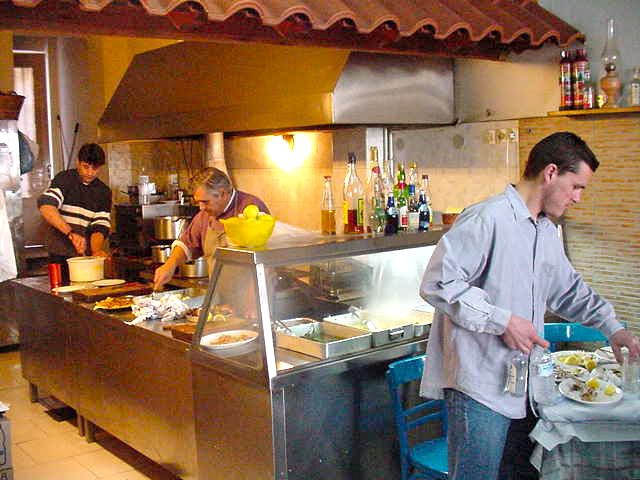 If I had more time I would
certainly stop at one of the cafe-ouzeries in
the back streets for some grilled octopus, a
carafe of Mytilini ouzo if they had it, and
maybe a salad. But this would be opening a
whole new can of worms and were I to get
involved in my surroundings I might even miss
the last boat to Pireaus which is around
midnight I think. They post the ferry boat and
flying Dolphin times on the kiosks where they
sell the tickets right on the dock. Anyway I
have plans to go out with my new pal David
Willett from Lonely Planet Guides, an
excellent wine and ouzo drinker himself. My
friend Ana works on the Metro has
promised to give us piles of information on
Athens new subway system and I wouldn't want
to miss an evening with so much potential for
excitement. (she gave me a pen, a map and a
commemorative coin).
Anyway Aegina is famous for its seafood restaurants and one of the specialties is sea-urchins. There are several simple seafood restaurants near the fish market. If I had more time I would
certainly stop at one of the cafe-ouzeries in
the back streets for some grilled octopus, a
carafe of Mytilini ouzo if they had it, and
maybe a salad. But this would be opening a
whole new can of worms and were I to get
involved in my surroundings I might even miss
the last boat to Pireaus which is around
midnight I think. They post the ferry boat and
flying Dolphin times on the kiosks where they
sell the tickets right on the dock. Anyway I
have plans to go out with my new pal David
Willett from Lonely Planet Guides, an
excellent wine and ouzo drinker himself. My
friend Ana works on the Metro has
promised to give us piles of information on
Athens new subway system and I wouldn't want
to miss an evening with so much potential for
excitement. (she gave me a pen, a map and a
commemorative coin).
Anyway Aegina is famous for its seafood restaurants and one of the specialties is sea-urchins. There are several simple seafood restaurants near the fish market. |
|
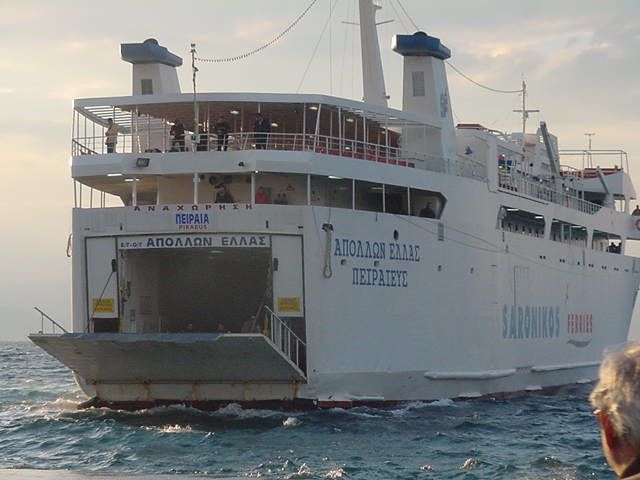 Time seems to almost stand
still on a ferry boat. They move awfully slow.
The Dolphins race along at a breathtaking 35
mph and the ferries only go half that speed.
But before you know it we are once again
passing between the tankers and freighters and
into the harbor of Pireaus where dusk is
setting and the big ferries to Crete, and
Lesvos are getting ready to sail. As we pass
the Mytilini the last passengers are getting
on board and then it will untie the ropes for
the overnight journey to Lesvos, a journey I
kind of wish I was going on. Time seems to almost stand
still on a ferry boat. They move awfully slow.
The Dolphins race along at a breathtaking 35
mph and the ferries only go half that speed.
But before you know it we are once again
passing between the tankers and freighters and
into the harbor of Pireaus where dusk is
setting and the big ferries to Crete, and
Lesvos are getting ready to sail. As we pass
the Mytilini the last passengers are getting
on board and then it will untie the ropes for
the overnight journey to Lesvos, a journey I
kind of wish I was going on.
Returning to Pireaus I
prefer to have a taxi waiting for me. Usually
I am beat or I don't want to deal with the
chaos, and 35 euro for a transfer from my
pal
George Kokkotos the Famous Taxi
driver is a
small fee to pay to avoid it.
Most people seem to be in a hurry to get off the boat. Generally I am more laid-back about getting
off the ferry, which has worked to my
disadvantage at times. Your best bet is to
stand at the back of the boat as it docks and
scan the buildings for the familiar shape of
the railroad station. Then follow the crowd
off the boat and head towards the station.
Remember to validate your ticket before
getting on the train.
You can't use the one you came to Pireaus on so if you didn't buy two, buy another one now. |
|
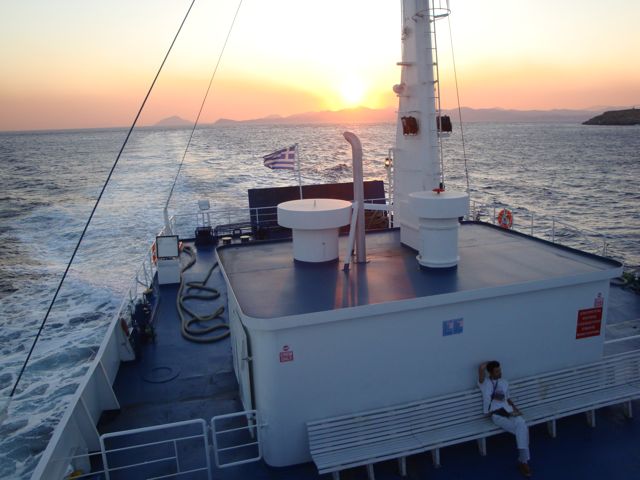 If you are like me on
today's journey to Aegina or one of the other Saronic Gulf Islands, you will be back in plenty of
time for an ouzo and mezedes
at Evi Cafe in Psiri before dinner. But
even if your ferry gets in at ten pm or later
you can be confident that you can dump your
luggage in the hotel and go right back out for
dinner because things will just be getting
started in Athens.
Most ferries leave the islands in the afternoon, except for those that are overnight and they leave between 6 and 9pm and arrive in the morning. If you are like me on
today's journey to Aegina or one of the other Saronic Gulf Islands, you will be back in plenty of
time for an ouzo and mezedes
at Evi Cafe in Psiri before dinner. But
even if your ferry gets in at ten pm or later
you can be confident that you can dump your
luggage in the hotel and go right back out for
dinner because things will just be getting
started in Athens.
Most ferries leave the islands in the afternoon, except for those that are overnight and they leave between 6 and 9pm and arrive in the morning. There is a whole new generation
of high-speed ferries that are now sailing the islands some
making several trips a day from Pireaus to the Cyclades and
even going to the islands further away. For info on
these and other ferry boats in Greece see www.greecetravel.com/ferryboats.
You can read more about Aegina on my Aegina Page
If you have any questions about How To Go to a Greek Island you can e-mail me.
|
More Helpful Greece Information
|
|
The best way to go to a Greek island if by booking hotels and ferries through a reliable Greek Travel Agency. I recommend Fantasy Travel and Dolphin Hellas in Athens and Aegean Thesaurus in Sifnos. They can take care of all your arrangements including transportation
between the airport, ports and hotels. But you can also book ferry tickets through Dolphin
Hellas' Ferry Booking Page. (You won't need to for Aegina). You can also get ferry schedules and buy ferry tickets from the excellent Ferryhopper.com
An easy way to book your trip is by using my Create-an-itinerary form which enables you to put together your own plan for Greece and the islands with the help of a Greek travel agent. You can use the form and you are under no obligation to buy.
For those who like booking without using a travel agency I suggest you use Matt's Best Hotels of Greece page where I have picked the best hotels in Greece and made it easy for you to find the right one and book it. You can also follow my affiliate link to Booking.com which features hotels all over Greece with photos,
reviews, maps and booking information, most of which you can book and cancel without a charge.
For taxis and transfers between the airport, ports and hotels I recommend George the Famous Taxi Driver. He also does tours of the mainland and Athens.
For information on all the islands see my Greek Island Guide
For information on Athens see my Athens Survival Guide
If you are confused about where to go because all the islands look so good then try Matt's Suggestions Page
|
|